Emergency Procurement: How to Source Critical Industrial Parts Fast
An unplanned equipment failure does not wait for business hours. When a critical machine goes down on a production line, in a power facility, or on an oil platform, every hour of downtime translates directly into lost revenue, delayed contracts, and mounting pressure on operations teams.
The difference between a two-hour fix and a two-day shutdown often comes down to one thing: how quickly you can get the right industrial parts in hand. This guide covers what emergency procurement involves, the most common challenges industrial facilities face when sourcing critical components under pressure, and what to look for in an industrial parts supplier that can genuinely deliver when urgency is non-negotiable.
Industrial Partner specializes in rapid sourcing and delivery of critical industrial components when every hour matters. Browse the catalog or contact the team directly for urgent requests.
Browse industrial components or contact the team for urgent sourcing.
What Is Emergency Industrial Procurement?
Emergency procurement refers to the urgent sourcing of industrial parts, components, or equipment outside of a facility's standard purchasing cycle. It is triggered by unplanned breakdowns, safety-critical failures, or situations where a facility cannot wait for standard lead times.
Unlike routine procurement — where orders are planned weeks or months in advance — emergency spare parts sourcing operate under extreme time pressure. The priority shifts from price optimization to speed, availability, and reliability of supply.
Common scenarios that trigger emergency procurement include:
• A critical motor, drive, or PLC failure that halts production
• Hydraulic or pneumatic component failure on heavy equipment
• Sensor or control system failure affecting safety systems
• Storm or incident damage to electrical infrastructure
• A supplier delivering the wrong component at the last moment
In each of these situations, the facility needs an industrial component supplier that can confirm availability, process the order immediately, and ship with the fastest possible transit time.
The Hidden Costs of Downtime in Industrial Operations
The cost of unplanned downtime is consistently underestimated until it happens. Studies across the manufacturing, oil and gas, and utilities sectors show that equipment downtime can cost industrial operations anywhere from tens of thousands to hundreds of thousands of dollars per hour, depending on the facility and the process affected.
These costs accumulate across several dimensions:
Direct Production Losses
When a line or machine stops, output stops. In high-volume manufacturing or continuous-process environments such as food production, chemicals, or power generation, the cost per idle hour is substantial and immediate.
Labor and Overtime Costs
Maintenance teams scramble, production staff are idled or redeployed, and if the repair extends into the next shift, overtime costs begin to stack. Emergency repairs often require additional specialist labor, adding further cost.
Contractual and Delivery Penalties
Downtime that causes missed shipments or delayed deliveries can trigger penalty clauses with customers or logistics partners. In industries with tight SLAs, a single unplanned outage can have commercial consequences beyond the lost production itself.
Secondary Equipment Damage
When a component fails without being caught early, it can damage connected equipment. A failed bearing damages a shaft. A failed pressure switch causes a pump to run dry. The original repair becomes a larger, more expensive job.
The cost of sourcing a critical industrial part at premium speed is almost always a fraction of the cost of extended downtime. The economics of emergency procurement strongly favor speed over price negotiation.
Challenges in Emergency Spare Parts Sourcing
Emergency procurement is not simply a matter of calling a supplier and placing a rush order. Several factors make urgent industrial parts sourcing genuinely difficult.
Obsolete and Legacy Components
Many industrial facilities operate equipment that is 10, 20, or even 30 years old. When a legacy PLC, drive, or sensor fails, the original manufacturer may have discontinued the part. Standard distributors often do not stock obsolete components, and lead times for alternatives or cross-references can run into weeks.
An experienced industrial parts supplier with deep inventory of legacy and obsolete components is often the only source that can resolve this kind of failure quickly.
Limited Visibility into Stock Availability
When time is critical, the last thing a maintenance manager needs is to place an order, receive confirmation, and then be told three days later that the part is actually out of stock or backordered. Real stock visibility — knowing what is physically on the shelf before committing — is essential in emergency sourcing.
Geographic and Logistics Constraints
Fast industrial parts delivery depends not just on whether a supplier has the part, but on where it is and how it can be shipped. A supplier located strategically with access to expedited freight and international shipping options is a significant advantage for facilities that cannot afford standard transit times.
Identifying the Correct Replacement
In high-pressure situations, there is a real risk of ordering the wrong part — a similar model number, an incompatible revision, or a cross-reference that does not meet the original specification. Suppliers with technical expertise in industrial components can confirm compatibility before shipping, preventing costly delays from incorrect parts.
What to Look for in an Industrial Parts Supplier for Emergency Sourcing
Not all industrial suppliers are equipped to handle emergency procurement. When evaluating an industrial component supplier for urgent needs, prioritize the following:
1. Depth and Breadth of Inventory
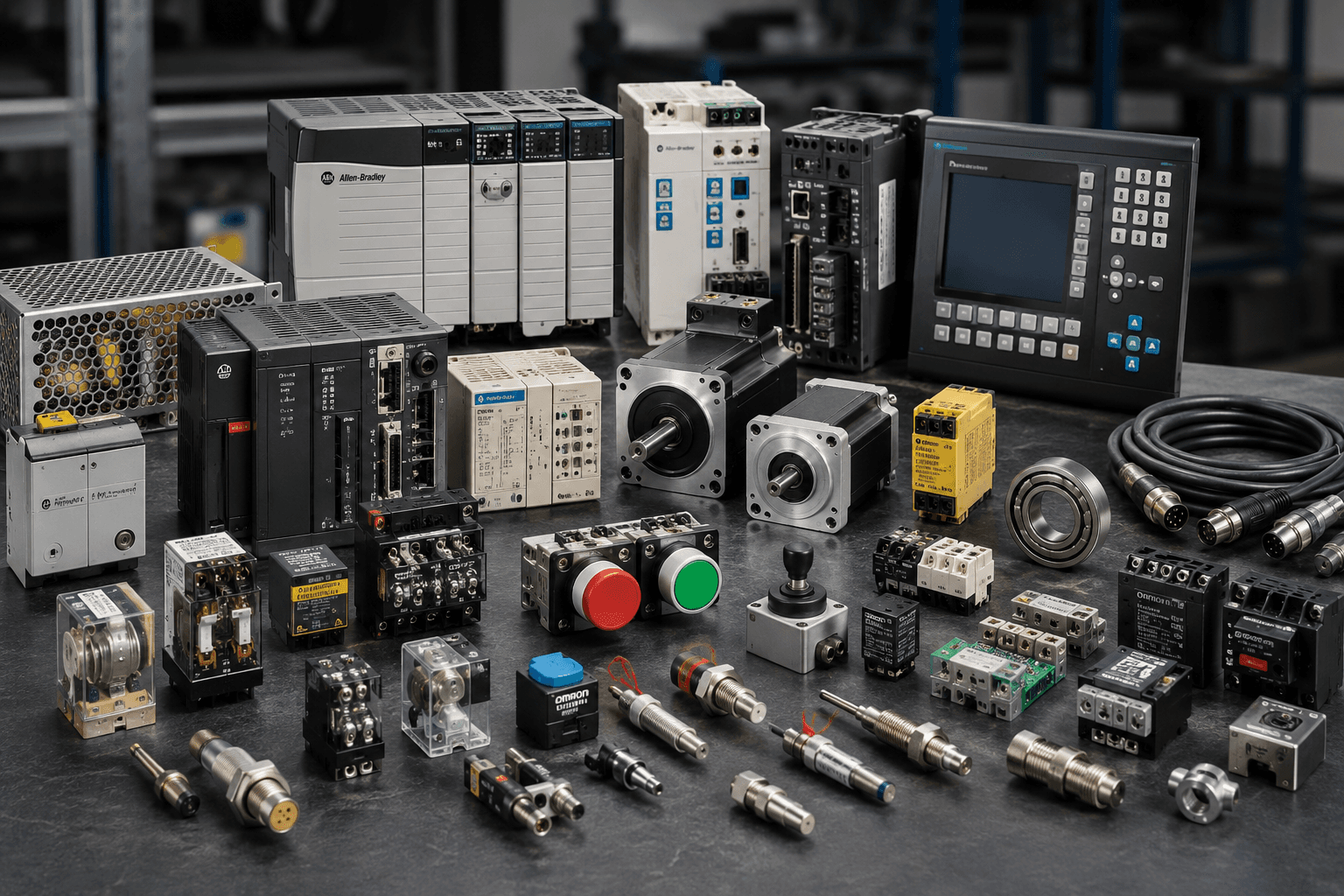
The supplier must stock a wide range of components across multiple categories — drives, sensors, PLCs, power supplies, relays, connectors, and more — from multiple manufacturers. A broad catalog means fewer situations where the part you need requires a second or third supplier call.
Browse Industrial Partner's full product catalog across industrial controls, sensors, drives, and more.
2. Obsolete and Hard-to-Find Component Capability
A supplier that focuses only on current product lines cannot help when a legacy component fails. Look for suppliers who actively stock discontinued parts and have the sourcing network to locate hard-to-find components when they are not in their own inventory.
3. Fast Order Processing and Confirmed Lead Times
Emergency procurement requires same-day or next-day order processing with confirmed, not estimated, lead times. A supplier that can confirm the part is in stock, process the order within hours, and provide a real tracking number is worth significantly more than a cheaper option with uncertain availability.
4. Technical Expertise
When you are replacing a failed component under pressure, having access to technically knowledgeable staff who can confirm cross-references, check specifications, and flag potential compatibility issues is critical. This expertise prevents the costly mistake of shipping the wrong part.
5. Reliable Shipping and Logistics Partners
Speed of fulfillment matters only if the logistics chain delivers reliably. The right industrial parts supplier has established relationships with expedited freight carriers and can offer overnight or next-day delivery options to industrial facilities across their service region.
Contact Industrial Partner to discuss urgent sourcing requirements and delivery options.
A Practical Emergency Procurement Checklist
When a critical failure occurs and you need to source industrial parts fast, work through the following steps to minimize delays:
1. Identify the failed component precisely. Gather the full part number, manufacturer name, serial number, and any nameplate data from the failed component before contacting a supplier.
2. Check your internal stores first. Confirm whether a spare is already held on-site in your maintenance inventory. This step takes minutes and occasionally resolves the issue immediately.
3. Contact your industrial parts supplier with full part details. Provide the complete part number and ask for confirmation of physical stock — not estimated availability.
4. Request confirmation of the fastest available shipping option. Ask for a real tracking number and confirmed delivery window, not a standard lead time estimate.
5. Confirm technical compatibility if substituting. If the exact part is unavailable and a cross-reference or alternative is proposed, ask the supplier to confirm compatibility against your equipment's specifications.
6. Document the failure and order for your maintenance records. Record the failure mode, the part sourced, the supplier used, and the lead time. This data improves future procurement planning and spare parts stocking decisions.
Proactive Steps to Reduce Emergency Procurement Frequency
While having a reliable industrial parts supplier for emergencies is essential, the best maintenance operations also take steps to reduce how often they face emergency sourcing situations in the first place.
Maintain a Critical Spare Parts Inventory
Identify the components most likely to cause extended downtime if they fail — motors, drives, critical sensors, PLC modules — and hold at least one spare on-site. The cost of stocking a spare is almost always lower than the cost of a single emergency sourcing event.
Implement Predictive Maintenance
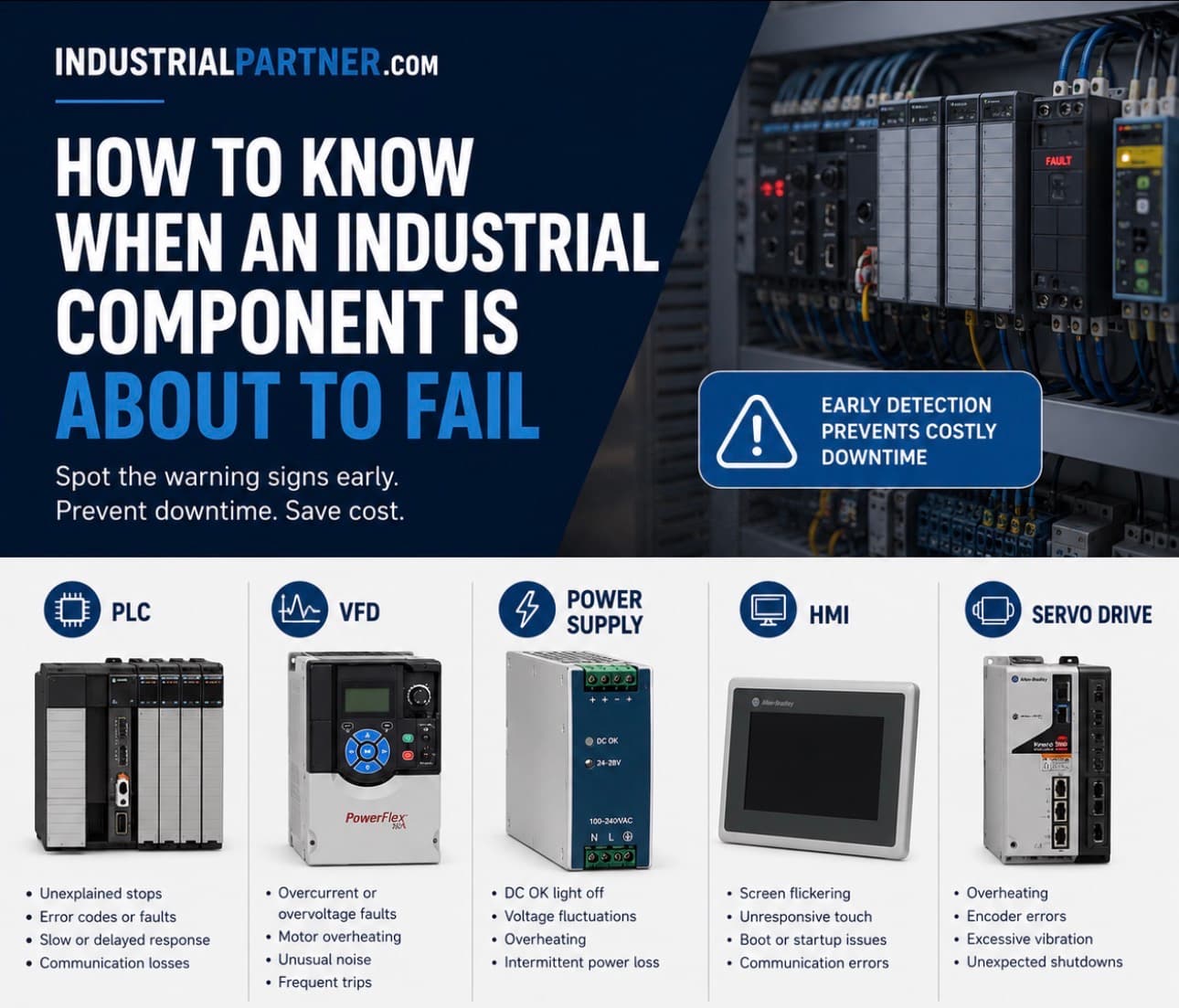
Sensor-based condition monitoring allows maintenance teams to detect early warning signs of component failure before a breakdown occurs. When a bearing shows unusual vibration or a drive reports increasing thermal load, you can order a replacement on normal lead times rather than emergency terms.
Read more: Industrial Sensors and Monitoring Devices for Predictive Maintenance.
Build a Relationship with a Trusted Industrial Component Supplier
The worst moment to start evaluating an industrial parts supplier is when a machine is already down. Establishing a relationship in advance — understanding their inventory depth, their technical capabilities, and their logistics options — means that when an emergency occurs, you already know who to call and how fast they can move.
Conclusion: Speed, Stock, and the Right Supplier Partner
Emergency procurement is a reality for every industrial operation. Equipment fails, and the facilities that recover fastest are those that have already identified a reliable industrial parts supplier capable of moving at the speed the situation demands.
The right supplier combines deep, genuine inventory across a broad range of industrial categories — including obsolete and hard-to-find components — with technical expertise to confirm compatibility and the logistics capability to deliver fast industrial parts without compromise.
Industrial Partner specializes in rapid sourcing and delivery of critical industrial components. Whether you need a common replacement part or a discontinued legacy component, the team is ready to help you get back online fast.
Browse the full industrial parts catalog or contact the Industrial Partner team for urgent sourcing support.