Discover how industrial sensors and switches such as float switches, proximity sensors, and pressure switches power automation systems. Explore sensor applications and replacement parts at Industrial Partner.
Industrial Sensors and Switches
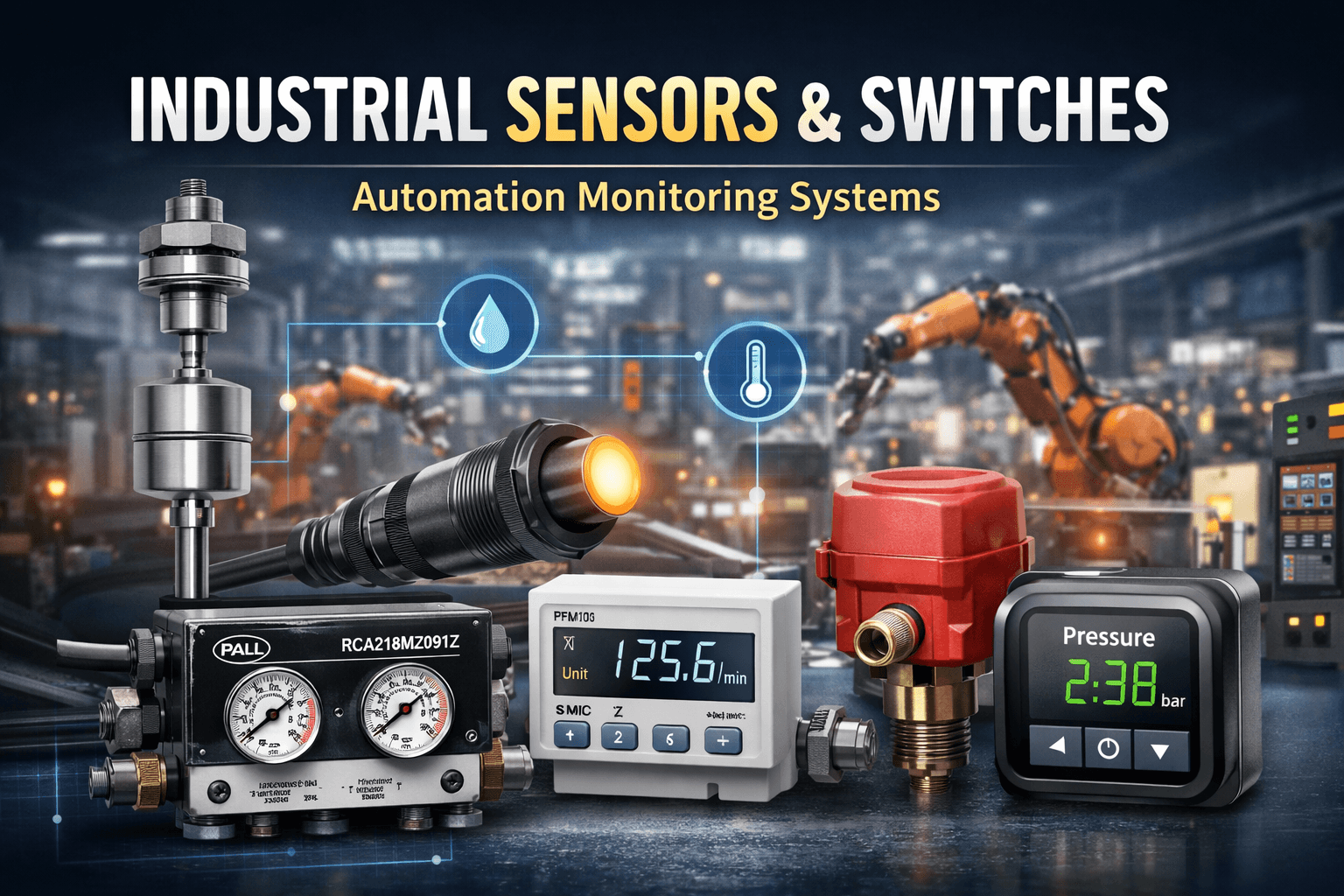
Industrial automation systems rely on sensors and switches to monitor physical conditions and trigger control actions. These components act as the “eyes and ears” of automation systems, detecting changes in:
- liquid levels
- pressure
- temperature
- motion
- proximity
Sensors send signals to PLCs, industrial computers, and control systems, enabling machines to respond automatically.
Companies maintaining industrial systems often source replacement sensors from suppliers such as Industrial Partner.
Browse industrial sensors and components:
Industrial sensors are designed for high reliability, durability, and continuous operation in harsh environments.
What Are Industrial Sensors?
Industrial sensors are devices that detect physical or environmental changes and convert them into electrical signals.
These signals are used by automation systems to:
- monitor system performance
- control machinery
- trigger alarms
- improve safety
Industrial switches function similarly but typically operate in ON/OFF states, making them ideal for simple control applications.
Types of Industrial Sensors and Switches
Industrial automation systems use a wide variety of sensors depending on the application.
Float Switches
Float switches detect liquid levels in tanks, reservoirs, and pipelines.
They are commonly used in:
- water treatment plants
- oil and gas systems
- chemical processing
- storage tanks
Example float switch products:
Anchor Scientific GSI30NONC Float Switch
Magnetrol T10-5104-040 Float Switch
Anchor Scientific GP20NONC Float Switch
These float switches provide reliable liquid level detection in industrial environments.
Proximity Sensors
Proximity sensors detect the presence or absence of objects without physical contact.
They are used in:
- conveyor systems
- packaging machines
- robotics automation
- safety systems
These sensors improve efficiency and reduce mechanical wear.
Pressure Switches
Pressure switches monitor pressure levels in industrial systems.
They are widely used in:
- hydraulic systems
- pneumatic systems
- fluid control systems
Example pressure-related device:
Pall RCA218MZ091Z Differential Pressure Switch
Flow Sensors and Switches
Flow sensors monitor the movement of liquids or gases within pipelines.
Example:
➡ SMC PFM750S Digital Flow Switch
https://industrialpartner.com/products/smc/digital-flow-switches/pfm750s-01l-b-m
These devices help ensure proper flow rates in industrial processes.
Temperature Sensors
Temperature sensors monitor heat levels in equipment and processes.
They are critical in:
- manufacturing processes
- HVAC systems
- energy systems
Temperature monitoring helps prevent overheating and equipment failure.
Applications of Industrial Sensors
Industrial sensors are used across multiple industries.
Manufacturing Automation
Sensors monitor machine performance and ensure production quality.
Examples include:
- detecting product position on conveyor belts
- monitoring machine cycles
- controlling robotic systems
Water and Wastewater Treatment
Float switches and level sensors monitor tank levels and fluid movement.
These systems ensure proper operation of treatment processes.
Oil and Gas Industry
Sensors monitor:
- pressure levels
- flow rates
- tank levels
These measurements are critical for safety and efficiency.
Energy and Power Systems
Sensors are used to monitor system performance in:
- power plants
- renewable energy systems
- electrical distribution systems
Benefits of Industrial Sensors and Switches
Real-Time Monitoring
Sensors provide instant feedback to automation systems, enabling faster decision-making.
Improved Safety
Sensors detect abnormal conditions and trigger alarms or shutdown systems.
Increased Efficiency
Automation systems use sensor data to optimize performance and reduce waste.
Reduced Downtime
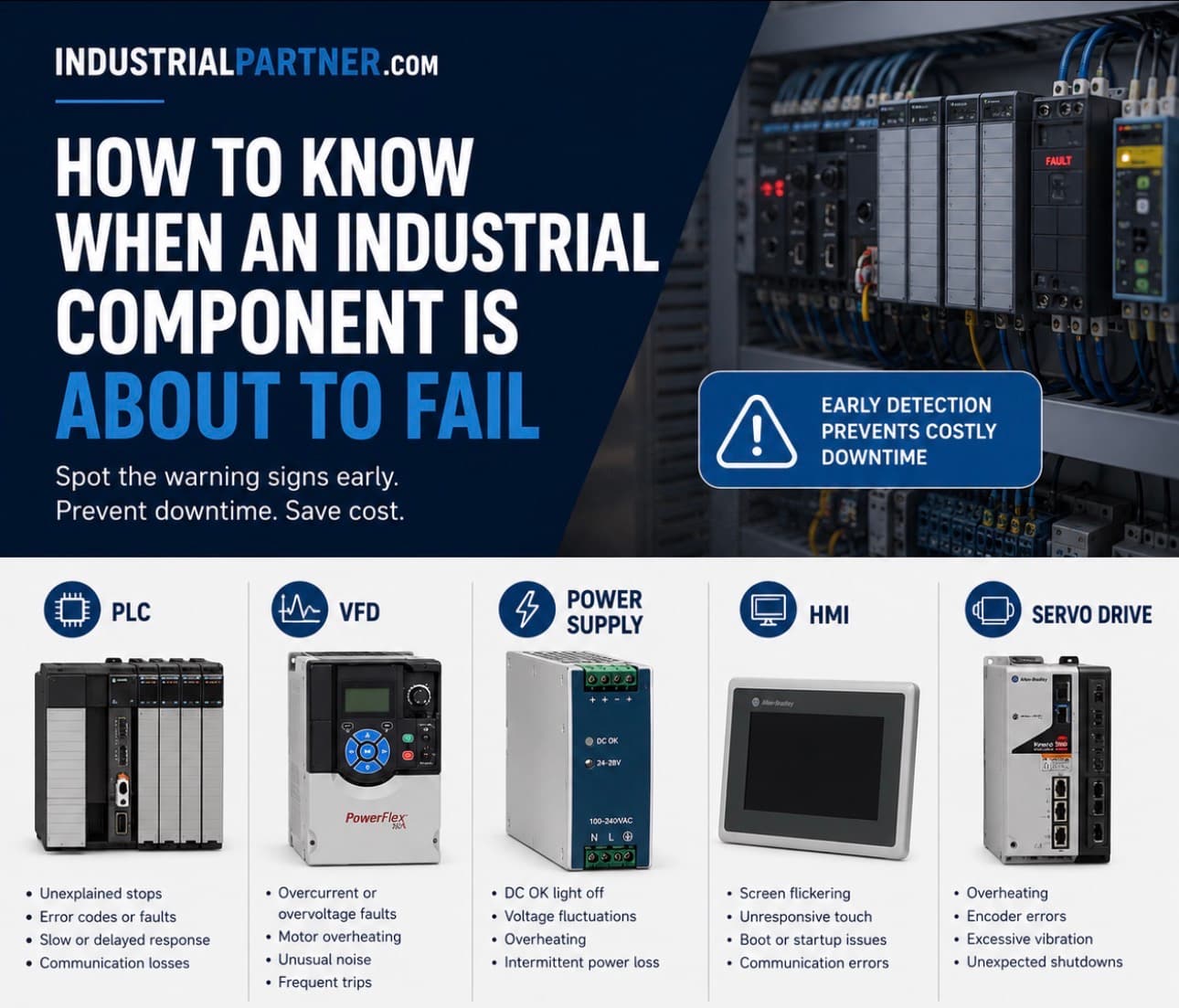
Early detection of issues helps prevent system failures and costly downtime.
Choosing the Right Industrial Sensor
Selecting the correct sensor depends on several factors.
Environmental Conditions
Sensors must withstand:
- temperature extremes
- moisture
- vibration
- chemical exposure
Accuracy Requirements
Different applications require different levels of precision.
Output Type
Sensors may provide:
- analog signals
- digital signals
- switching outputs
Compatibility
Sensors must integrate with:
- PLC systems
- industrial controllers
- automation networks
Replacement Sensors and Legacy Systems
Many industrial facilities operate older systems that require replacement sensors.
Industrial Partner provides components for:
- legacy automation systems
- discontinued sensor models
- hard-to-find industrial parts
Browse replacement components
These parts help extend system lifespan and reduce maintenance costs.
Future Trends in Industrial Sensors
Smart Sensors and IoT Integration
Modern sensors now support:
- wireless communication
- cloud connectivity
- real-time data analytics
Predictive Maintenance
Sensor data is used to detect potential failures before they occur.
Energy Efficiency
Sensors help optimize energy usage in industrial systems.
Conclusion
Industrial sensors and switches are essential components in automation systems, enabling machines to monitor conditions and respond in real time.
From float switches and pressure sensors to proximity detectors and flow switches, these devices ensure efficient, safe, and reliable industrial operations.
As automation systems continue to evolve, sensors will play an even greater role in enabling smart factories and industrial IoT environments.
Companies sourcing industrial sensors and replacement components often rely on Industrial Partner, which offers a wide catalog of automation parts and hard-to-find industrial equipment.