Industrial Power Supplies: Choosing the Right AC/DC Power Solutions
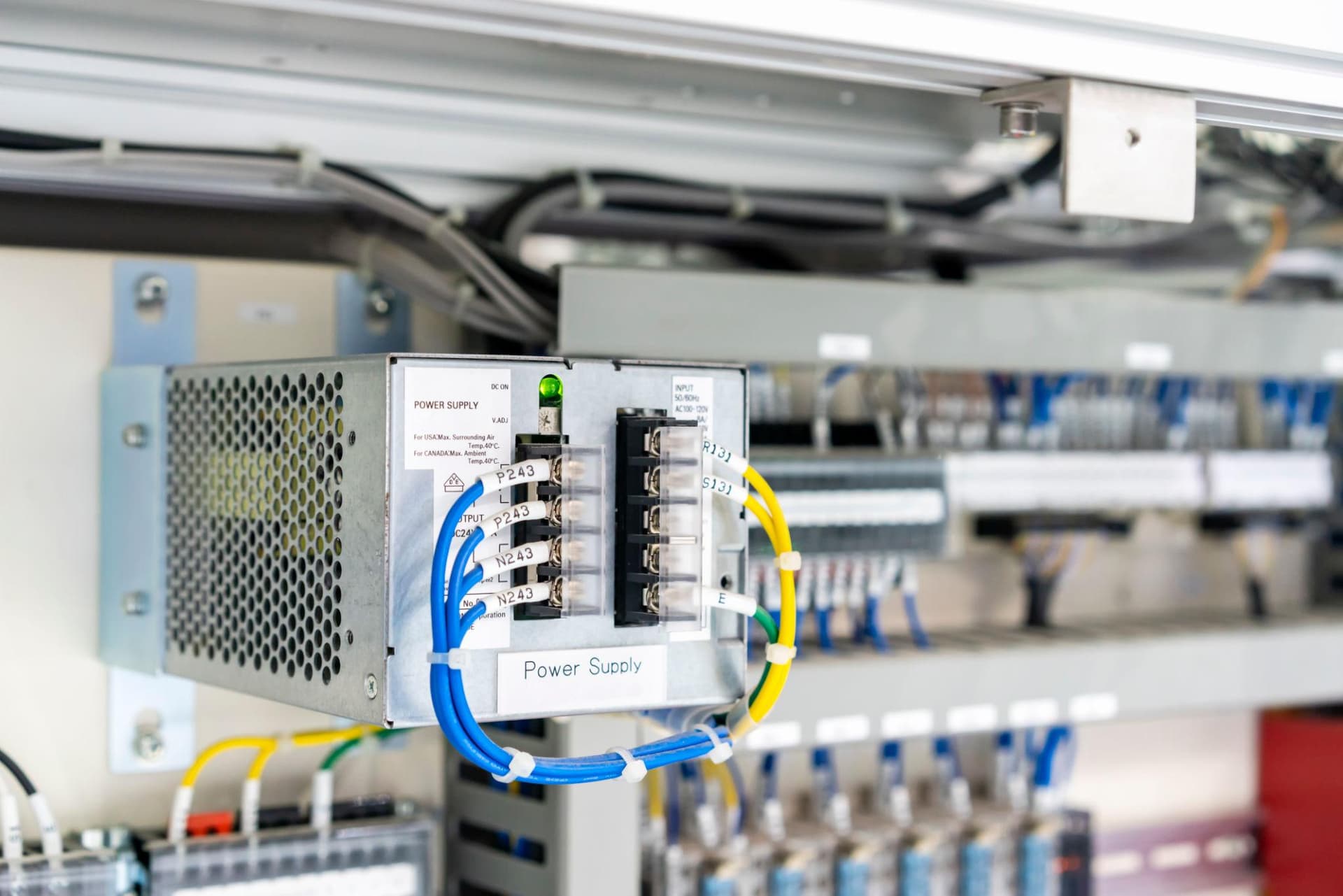
Industrial automation systems depend on stable and reliable power supply units to ensure continuous operation. From PLC systems to industrial computers and sensors, every component relies on consistent voltage and current.
Choosing the right industrial power supply is critical for:
- system reliability
- equipment protection
- operational efficiency
Companies sourcing power modules often rely on Industrial Partner for reliable and replacement-ready components.
What is an Industrial Power Supply?
An industrial power supply converts electrical energy into usable power for industrial equipment.
Most industrial systems require DC power, typically:
- 12V DC
- 24V DC
- 48V DC
Among these, 24V power supplies are the most widely used in automation systems.
Types of Industrial Power Supplies
AC to DC Power Supplies
These convert incoming AC power into regulated DC output.
Used in:
- PLC systems
- industrial control panels
- automation systems
Example:
Open Frame Power Supplies
Compact units used inside equipment and control cabinets.
Common in:
- embedded systems
- industrial PCs
- automation devices
Example: Shanghai Junhao PSA-45A Open Frame Power Supply
Enclosed Power Supplies
These include protective casings for harsh environments.
Used in:
- manufacturing plants
- robotics systems
- heavy machinery
Redundant Power Supplies
Used in mission-critical systems to ensure uninterrupted operation.
Example: Zippy MPN4-6810F Redundant Power Supply
Applications of Industrial Power Supplies
Automation Systems
Power supplies support PLC controllers, sensors, and control modules.
Industrial Computers
Embedded systems require stable voltage for processing operations.
Robotics
Robotic systems rely on consistent power for precision movement.
Telecommunications and Networking
Power modules support communication infrastructure.
Key Features to Consider
Voltage Stability
Ensures consistent operation of sensitive electronics.
Efficiency
High-efficiency power supplies reduce heat and energy consumption.
Durability
Designed to withstand:
- vibration
- temperature fluctuations
- electrical noise
Compact Design
Important for integration into control panels and embedded systems.
Protection Features
Includes safeguards such as:
- overvoltage protection
- short circuit protection
- thermal protection
Why Power Supply Quality Matters
Using poor-quality power supplies can lead to:
- system failures
- damaged components
- production downtime
- increased maintenance costs
Reliable power modules ensure long-term system stability.
Replacement Power Supplies and Legacy Systems
Many industrial systems rely on older or discontinued power supplies.
Industrial Partner provides:
- replacement power modules
- obsolete power supplies
- hard-to-find components
Real-World Example
A production facility experiences frequent shutdowns due to unstable power supply units.
By replacing faulty modules with reliable industrial-grade power supplies:
- system uptime improves
- maintenance costs decrease
- productivity increases
Future Trends in Industrial Power Systems
Smart Power Supplies
Advanced units include monitoring and diagnostics features.
Energy Efficiency Standards
Industries are adopting eco-friendly power solutions.
Integration with IoT
Power systems are becoming part of connected industrial networks.
Conclusion
Industrial power supplies are essential components in automation systems, providing stable and reliable energy to critical equipment.
Selecting the right power supply improves performance, reduces downtime, and protects industrial systems.
Businesses sourcing power solutions often rely on Industrial Partner for high-quality and replacement-ready industrial components.