Industrial PLC Modules and Digital I/O Systems
Industrial automation systems depend heavily on Programmable Logic Controllers (PLCs) to manage machines, monitor sensors, and control production processes. PLC modules and digital I/O systems allow industrial equipment to communicate with automation controllers and execute precise instructions in real time.
Modern factories rely on PLC systems to coordinate:
- manufacturing production lines
- robotics automation
- industrial machinery
- packaging systems
- material handling equipment
Companies maintaining automation systems often source replacement PLC modules from industrial component suppliers such as Industrial Partner.
Industrial PLC modules are engineered for high reliability, continuous operation, and flexible system expansion.
What is a PLC Module?
A PLC module is a component of a programmable logic controller system that performs a specific automation function.
PLC modules typically include:
- digital input modules
- digital output modules
- analog input/output modules
- communication interface modules
- CPU processing units
These modules connect to a central PLC rack or base unit that processes control logic and executes machine commands.
Industrial PLC modules communicate with field devices such as:
- sensors
- motors
- relays
- actuators
- valves
Types of PLC Modules
Industrial PLC systems are modular, allowing engineers to configure control systems based on specific application requirements.
Digital Input Modules
Digital input modules receive signals from industrial sensors and switches.
Common signal sources include:
- proximity sensors
- limit switches
- push buttons
- safety switches
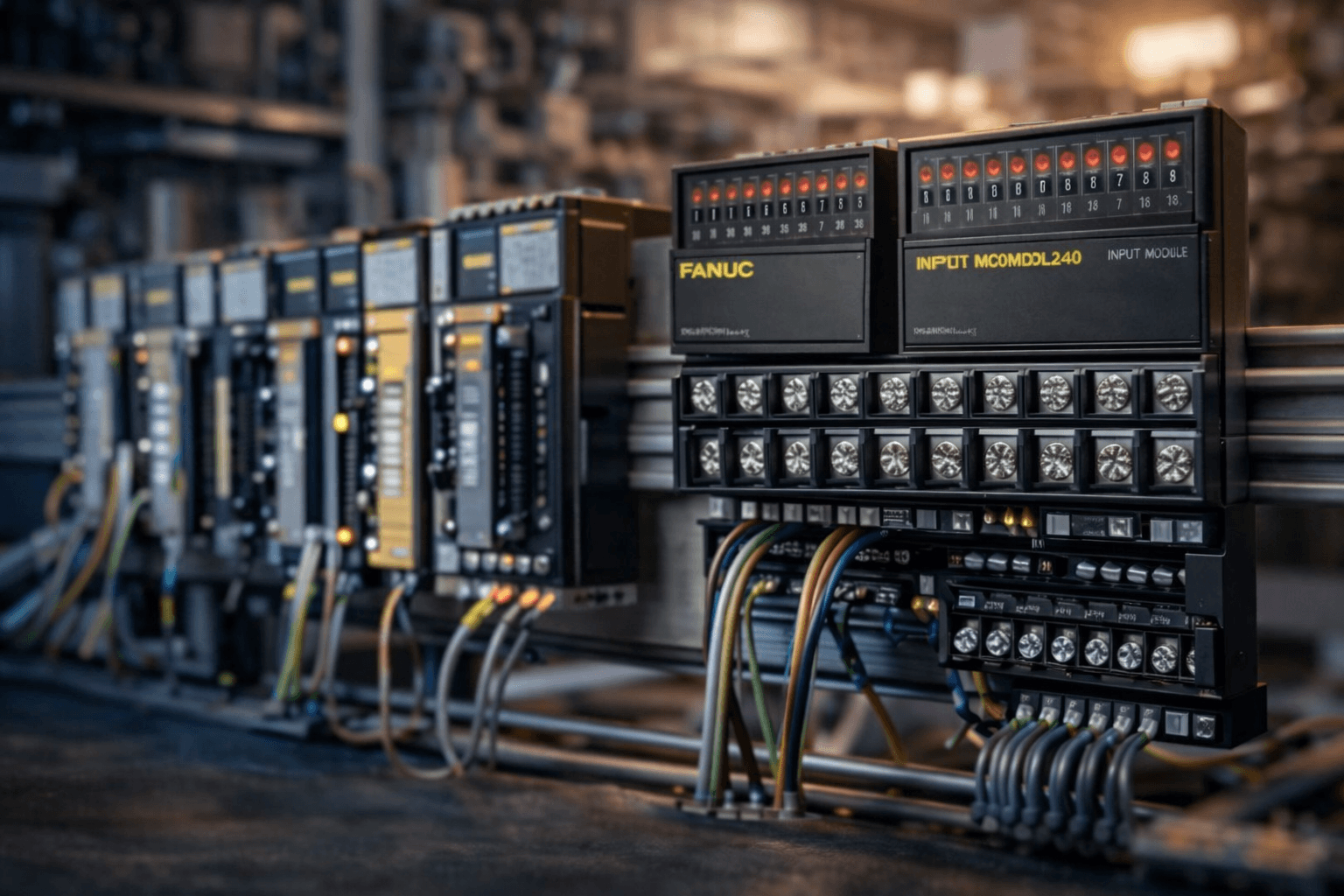
Example PLC input module:
FANUC IC200MDL240 Input Module
This module allows PLC controllers to monitor machine states and respond to system conditions.
Digital Output Modules
Digital output modules send signals from the PLC controller to operate industrial devices.
These devices include:
- relays
- solenoid valves
- motors
- indicator lights
Example automation output module:
Allen-Bradley 1746-OA8 Digital Output Module
Allen-Bradley PLC modules are widely used in factory automation systems worldwide.
Analog I/O Modules
Analog modules process continuous signals rather than simple ON/OFF signals.
These signals may include:
- temperature measurements
- pressure readings
- flow measurements
- motor speed control
Analog modules allow PLC controllers to manage complex industrial processes.
Communication Modules
Communication modules allow PLC systems to connect with industrial networks.
Common protocols include:
- Ethernet/IP
- Modbus
- Profibus
- DeviceNet
- CAN Bus
These modules enable PLC systems to integrate with industrial computers, robotics systems, and SCADA monitoring platforms.
Applications of PLC Modules
PLC systems are used across a wide range of industrial sectors.
Manufacturing Automation
In manufacturing plants, PLC modules control equipment such as:
- conveyor systems
- packaging machines
- robotic assembly lines
- automated testing equipment
PLC controllers ensure that production equipment operates efficiently and safely.
Energy and Utilities
PLC modules are widely used in power plants and energy infrastructure to manage complex industrial processes.
Examples include:
- turbine control systems
- water treatment plants
- oil and gas production facilities
Robotics and Motion Control
Robotics automation systems use PLC controllers to coordinate robotic movements and machine operations.
PLC modules communicate with:
- servo drives
- motion controllers
- industrial sensors
These systems enable precise automation processes.
Building and Infrastructure Automation
PLC systems also manage building automation systems such as:
- HVAC control systems
- lighting automation
- energy management systems
Advantages of PLC-Based Automation
PLC automation offers several advantages compared with traditional relay-based control systems.
High Reliability
Industrial PLC systems are designed to operate continuously in demanding environments.
Their rugged design allows them to function reliably in:
- manufacturing plants
- energy facilities
- industrial processing environments
Flexibility
PLC programs can be updated or modified without rewiring electrical circuits.
This allows engineers to adjust automation processes quickly and efficiently.
Scalability
PLC systems can expand by adding additional modules as system requirements grow.
This modular architecture makes PLC systems adaptable to evolving production needs.
Real-Time Processing
PLCs process signals in real time, allowing machines to respond immediately to changing conditions.
This capability is essential for high-speed manufacturing systems.
Replacement PLC Modules and Legacy Equipment
Many industrial facilities operate legacy automation systems that require replacement PLC modules.
Industrial Partner provides replacement parts for many automation platforms, including:
- Allen-Bradley modules
- Siemens automation components
- FANUC automation modules
- B&R automation systems
Browse automation replacement parts
These components help extend the lifespan of industrial automation systems.
Future Trends in PLC Automation
Industrial automation continues to evolve as factories adopt Industry 4.0 technologies.
Emerging trends include:
Industrial IoT Integration
PLC systems now connect with industrial IoT platforms that allow remote monitoring and predictive maintenance.
Cloud-Based Automation
Automation systems increasingly integrate with cloud platforms for real-time analytics and process optimization.
AI-Powered Automation
Artificial intelligence is being integrated into automation systems to improve decision-making and operational efficiency.
Conclusion
Industrial PLC modules and digital I/O systems form the backbone of modern factory automation.
These systems allow machines to communicate with sensors, process signals, and control industrial equipment with high reliability and precision.
As manufacturing systems continue to evolve toward smart factories and Industry 4.0, PLC automation will remain a critical technology driving industrial innovation.
Companies sourcing replacement automation components frequently rely on suppliers such as Industrial Partner, which offers a wide catalog of PLC modules, industrial control boards, and automation hardware.