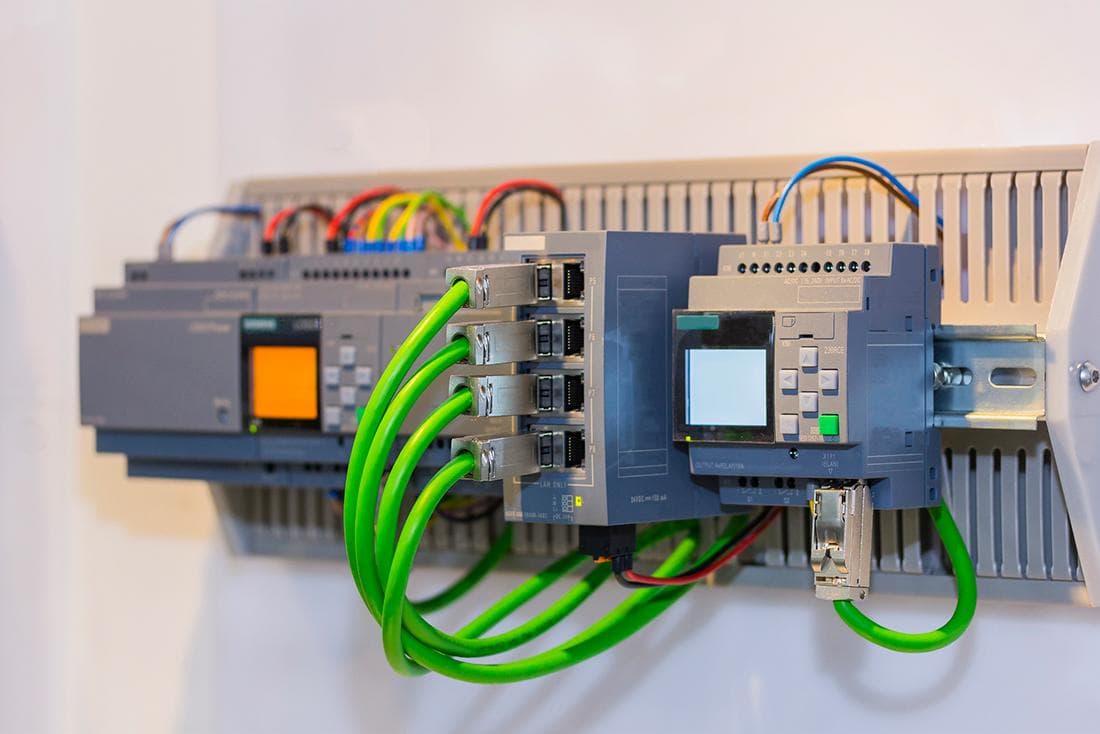
Industrial Communication and Networking Equipment
Modern industrial automation systems rely on communication and networking equipment to enable seamless data exchange between machines, controllers, and monitoring systems.
Industrial communication systems connect:
- PLC controllers
- industrial computers
- sensors and actuators
- SCADA systems
- cloud platforms
These networks are essential for real-time monitoring, automation control, and data-driven decision-making.
Companies sourcing industrial networking components often rely on Industrial Partner.
Browse networking and communication products:
What is Industrial Communication Equipment?
Industrial communication equipment includes devices that enable machines and systems to communicate within an automation network.
These devices transmit data using protocols such as:
- Ethernet/IP
- Modbus
- PROFIBUS
- CAN Bus
Reliable communication ensures that automation systems operate efficiently and without interruption.
Types of Industrial Networking Equipment
Network Interface Cards (NICs)
Network interface cards enable industrial computers and controllers to connect to networks.
Example:
Intel 668081-004 Network Adapter Card
Linksys LNE100TX Ethernet Card
These cards provide reliable connectivity for industrial systems.
Communication Modules
Communication modules enable PLCs and control systems to exchange data with other devices.
Example:
B&R Automation X20IF1030 Interface Module
Siemens 6ES7138-4HA00-0AB0 DP Master CPU Module
Media Converters and Network Devices
Media converters allow communication between different network types.
Example:
Transition Networks J-E-CF-02 Media Converter
Modems and Communication Cards
Industrial modems and communication cards enable long-distance data transmission.
Example:
Multi-Tech MT5634ZPX-PCI Modem Card
Fiber and Multiplexer Systems
These systems are used for high-speed communication in large-scale industrial networks.
Example:
Nortel FMT-150A Fiber Multiplexer Terminal
Applications of Industrial Networking Equipment
Industrial Automation Systems
Networking equipment connects PLCs, sensors, and machines to enable coordinated operations.
Industrial IoT (IIoT)
Communication systems enable real-time data exchange between machines and cloud platforms.
SCADA Systems
Supervisory Control and Data Acquisition systems rely on communication networks for monitoring and control.
Smart Manufacturing
Connected systems allow factories to operate more efficiently through data-driven insights.
Key Features of Industrial Networking Equipment
High Reliability
Designed for continuous operation in harsh industrial environments.
Real-Time Communication
Ensures fast data transmission for time-sensitive applications.
Network Security
Industrial networks include features to protect against cyber threats.
Scalability
Networks can expand as industrial systems grow.
Protocol Compatibility
Supports multiple industrial communication protocols.
Benefits of Industrial Communication Systems
Improved Efficiency
Connected systems streamline operations and reduce manual intervention.
Better Decision-Making
Real-time data enables faster and more accurate decisions.
Remote Monitoring
Operators can monitor systems from remote locations.
Reduced Downtime
Early detection of issues prevents system failures.
Choosing the Right Networking Equipment
When selecting industrial communication components, consider:
Network Requirements
Determine required speed, range, and bandwidth.
Environmental Conditions
Choose equipment designed for:
- temperature extremes
- vibration
- electrical noise
Compatibility
Ensure devices support existing automation systems and protocols.
Security Features
Select equipment with strong cybersecurity capabilities.
Replacement and Legacy Networking Equipment
Many industrial systems use legacy networking equipment that requires replacement.
Industrial Partner offers:
- discontinued network cards
- legacy communication modules
- hard-to-find components
Future Trends in Industrial Networking
Industrial IoT Expansion
More devices are being connected to industrial networks.
Edge Computing
Data processing is moving closer to machines for faster decision-making.
5G and Wireless Networks
Wireless technologies are transforming industrial communication.
Cybersecurity Enhancements
Industrial networks are becoming more secure against cyber threats.
Conclusion
Industrial communication and networking equipment are essential for modern automation systems. They enable machines, controllers, and systems to communicate efficiently and reliably.
From Ethernet cards and communication modules to modems and fiber systems, these components form the backbone of industrial connectivity.
Companies sourcing networking equipment often rely on Industrial Partner for reliable industrial components and replacement parts.