Industrial Maintenance and Spare Parts Strategy
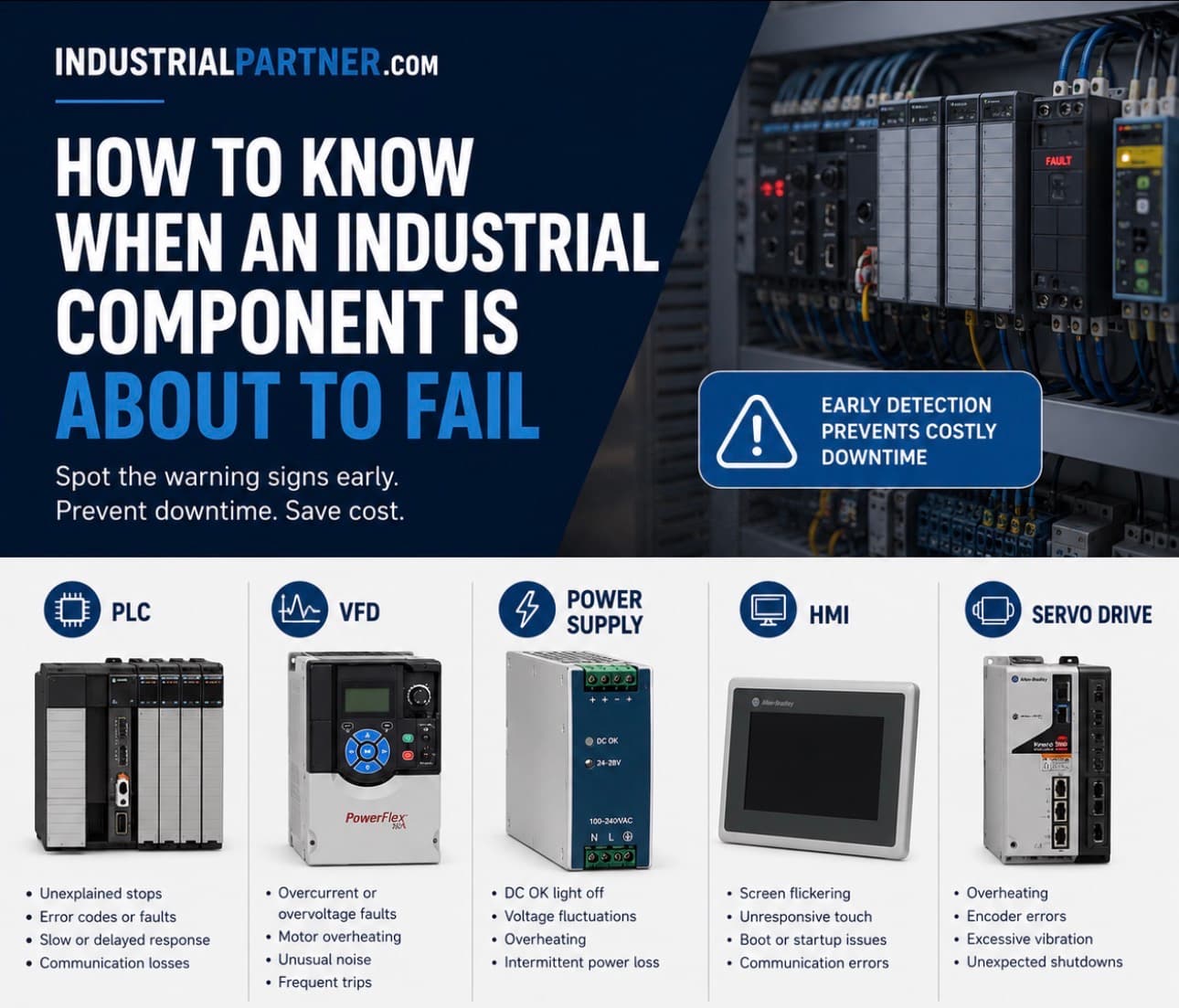
In industrial operations, downtime is one of the most expensive risks. A single equipment failure can halt production, delay delivery timelines, and lead to significant financial losses.
This is why companies invest in a strong industrial maintenance and spare parts strategy, ensuring that critical components are always available and systems are maintained proactively.
Organizations managing industrial systems often rely on Industrial Partner for sourcing replacement parts, legacy components, and maintenance-critical equipment.
Browse industrial spare parts and components
What is an Industrial Maintenance Strategy?
An industrial maintenance strategy is a structured approach to maintaining equipment to ensure:
- continuous operation
- reduced downtime
- improved efficiency
- longer equipment lifespan
It involves planning, monitoring, and replacing components before failure occurs.
Types of Industrial Maintenance
Preventive Maintenance
Preventive maintenance involves regular inspections and scheduled servicing to prevent failures.
Examples include:
- replacing worn components
- inspecting electrical connections
- testing system performance
Predictive Maintenance
Predictive maintenance uses data and sensors to predict when equipment will fail.
It relies on:
- vibration analysis
- temperature monitoring
- real-time system data
Reactive Maintenance
Reactive maintenance occurs after equipment failure.
While sometimes unavoidable, it is the costliest approach due to:
- unplanned downtime
- emergency repairs
- production losses
Importance of Spare Parts in Industrial Operations
Spare parts play a critical role in maintenance strategies.
Without readily available components, even minor failures can result in major downtime.
Critical Spare Parts Categories
Industrial facilities must stock essential components such as:
Industrial Electronics
- CPU boards
- motherboards
- PLC modules
Power Supplies
Power modules are among the most failure-prone components.
Sensors and Switches
Sensors are essential for monitoring system performance.
Motors and Drives
Motors and drives are critical for mechanical operations.
Control Boards and PLC Systems
Control systems are the backbone of automation.
Browse PLC and control systems:
Building an Effective Spare Parts Strategy
Identify Critical Components
Focus on parts that:
- have high failure rates
- cause major downtime
- are difficult to source
Maintain Inventory Levels
Ensure availability of:
- high-priority spare parts
- frequently replaced components
Source Reliable Suppliers
Working with trusted suppliers like Industrial Partner ensures access to:
- genuine components
- legacy parts
- hard-to-find replacements
Track Equipment Performance
Use monitoring systems to identify potential failures early.
Standardize Components
Using standardized parts simplifies maintenance and inventory management.
Benefits of a Strong Maintenance Strategy
Reduced Downtime
Quick access to spare parts minimizes system interruptions.
Cost Savings
Preventive maintenance reduces expensive emergency repairs.
Improved Efficiency
Well-maintained systems operate at optimal performance.
Extended Equipment Lifespan
Proper maintenance increases the longevity of industrial equipment.
Common Challenges in Spare Parts Management
Obsolete Components
Many industrial systems rely on discontinued parts.
Supply Chain Delays
Delays in sourcing components can impact operations.
Inventory Costs
Maintaining large inventories can be expensive.
Lack of Planning
Poor maintenance planning leads to reactive repairs.
Solutions to Spare Parts Challenges
Partner with Specialized Suppliers
Industrial Partner provides:
- obsolete components
- hard-to-find parts
- replacement solutions
Use Digital Inventory Systems
Track spare parts usage and availability in real time.
Implement Predictive Maintenance
Reduce unexpected failures through data-driven insights.
Real-World Example
A manufacturing plant experiences frequent downtime due to power supply failures.
By implementing a spare parts strategy:
- critical power modules are stocked
- failures are addressed immediately
- downtime is reduced significantly
Future Trends in Industrial Maintenance
Smart Maintenance Systems
AI-driven systems predict failures before they occur.
Industrial IoT Integration
Connected devices provide real-time monitoring and analytics.
Automation of Maintenance Processes
Maintenance tasks are becoming increasingly automated.
Conclusion
A well-planned industrial maintenance and spare parts strategy is essential for ensuring operational efficiency and minimizing downtime.
By combining preventive maintenance, predictive insights, and reliable spare parts sourcing, companies can significantly improve system performance and reduce costs.
Organizations often rely on Industrial Partner for sourcing high-quality industrial components, replacement parts, and legacy equipment.