Industrial CPU Boards and Embedded Motherboards
Modern industrial automation systems depend heavily on embedded computing technology. At the center of many of these systems are industrial CPU boards and embedded motherboards, which act as the computing engine that runs automation software, controls machinery, and processes data in real time.
These computing platforms are widely used in industries such as:
- manufacturing automation
- robotics systems
- transportation infrastructure
- industrial IoT environments
- energy production facilities
Industrial CPU boards available through Industrial Partner support many legacy automation systems and replacement equipment components.
➡ Browse available boards:
https://industrialpartner.com/products/cpu-boards/
Unlike standard desktop computer hardware, industrial CPU boards are designed to operate reliably under harsh environmental conditions including:
- vibration
- extreme temperature changes
- electrical noise
- dust and humidity
- continuous 24/7 operation
This durability makes them essential components in industrial control systems and automation equipment.
What is an Industrial CPU Board?
An industrial CPU board, often called a single-board computer (SBC), is a complete computer built on a single printed circuit board containing:
- processor
- memory
- communication interfaces
- expansion slots
- input/output connectivity
Industrial CPU boards integrate essential computing components into a compact and durable design, making them ideal for embedded automation systems.
A typical industrial CPU board includes:
- Intel / AMD / ARM processor
- RAM memory modules
- storage interfaces (SSD, SATA, NVMe)
- digital and analog I/O interfaces
- Ethernet communication ports
- serial ports (RS-232 / RS-485)
- expansion interfaces such as PCIe
Because all core components are integrated into a single platform, these boards improve system reliability, performance, and space efficiency.
Why Industrial CPU Boards Are Used in Automation
Industrial environments require equipment that can operate continuously without downtime. Embedded CPU boards are designed to meet these demanding conditions.
Reliability
Industrial boards are built using high-grade electronic components capable of operating in demanding environments such as factory floors and transportation infrastructure.
Examples of industrial CPU boards available through Industrial Partner include:
1. Advantech PCM-9375 Industrial CPU Board
2. Nexcom PEAK-555 Industrial CPU Board
These boards are commonly used in industrial control systems, robotics, and automation machines.
Compact Design
The compact architecture of embedded boards reduces the number of circuit boards and connectors required within automation equipment.
Benefits include:
- improved reliability
- smaller control cabinet space
- easier installation
- lower system complexity
Long Product Lifecycles
Industrial motherboard manufacturers often support product lifecycles of 10–15 years or longer, ensuring compatibility with legacy automation systems.
Replacement boards for older equipment can often be sourced through suppliers such as Industrial Partner, which maintains inventory of discontinued industrial components.
Types of Industrial CPU Boards
Industrial computing platforms come in multiple form factors depending on system requirements.
Single Board Computers (SBC)
Single-board computers contain all computing components on one board.
They are commonly used in:
- factory automation systems
- robotics controllers
- kiosk machines
- medical devices
- industrial test equipment
Example industrial SBC boards:
1. Portwell ROBO-8712VLA Industrial CPU Board
2. IEI ROCKY-4786EVG Industrial CPU Board
These boards are widely used in industrial embedded computing systems.
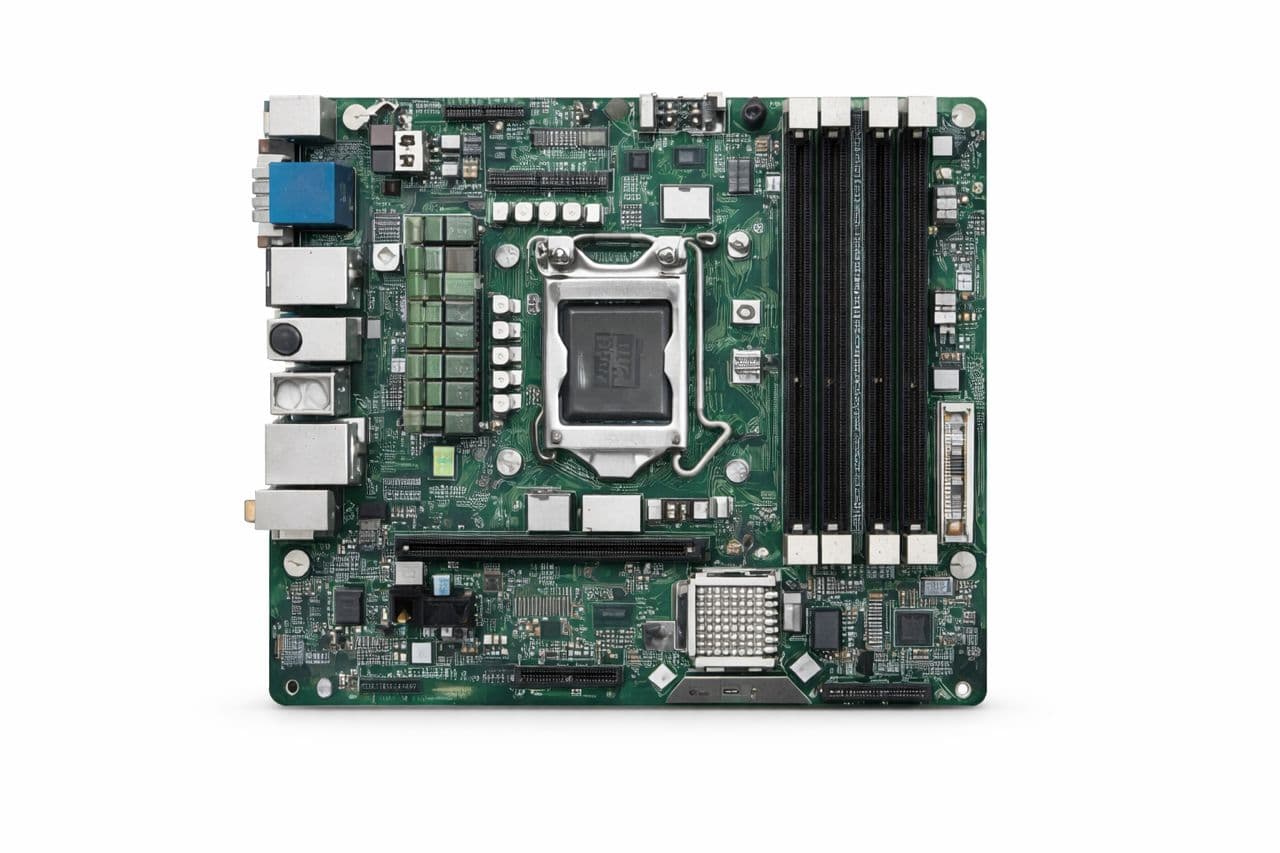
Mini-ITX and Embedded Motherboards
Mini-ITX motherboards are used when industrial computers require standard PC architecture with industrial durability.
Applications include:
- industrial PCs
- edge computing gateways
- machine vision systems
- industrial digital signage
Example embedded motherboards:
COM Express Modules
COM Express modules are compact embedded computing boards designed to connect to carrier boards.
Advantages include:
- modular upgrades
- flexible I/O expansion
- simplified hardware design
These modules are commonly used in industrial embedded systems and automation equipment.
Applications of Industrial CPU Boards
Industrial CPU boards power a wide range of automation systems.
Manufacturing Automation
Industrial computers equipped with embedded motherboards manage production equipment such as:
- automated assembly lines
- CNC machining systems
- robotics controllers
- material handling equipment
Automation controllers rely on these computing platforms to coordinate production processes.
Industrial IoT and Edge Computing
Embedded CPU boards collect and process data from sensors in real time.
This enables:
- predictive maintenance
- remote monitoring
- smart factory operations
Industrial IoT gateways often use embedded computing boards to process large volumes of sensor data.
Transportation and Infrastructure
Industrial computing platforms are used in:
- railway control systems
- traffic monitoring systems
- airport automation systems
Their rugged design allows reliable operation in demanding environments.
Medical Equipment
Many laboratory analyzers and medical imaging systems rely on embedded CPU boards for continuous operation.
These systems require stable computing platforms capable of operating without interruption.
Key Features to Look for in Industrial CPU Boards
Selecting the correct industrial CPU board requires evaluating several key factors.
Processing Power
Industrial boards may use processors such as:
- Intel Core processors
- Intel Atom processors
- ARM Cortex architecture
- AMD Ryzen Embedded processors
Processing power determines how efficiently automation systems process data and control equipment.
Connectivity
Industrial motherboards support many communication interfaces including:
- Ethernet networking
- USB connectivity
- CAN Bus communication
- RS-232 / RS-485 serial communication
- PCIe expansion slots
These interfaces allow industrial computers to communicate with PLCs, sensors, and automation devices.
Thermal Management
Industrial systems frequently operate in high-temperature environments.
Industrial CPU boards often include:
- fanless cooling designs
- aluminum heat sinks
- wide-temperature electronic components
These features help prevent overheating and ensure reliable operation.
Long-Term Availability
Automation system manufacturers prefer components with long-term availability.
Suppliers such as Industrial Partner specialize in sourcing:
- discontinued CPU boards
- legacy industrial computer components
- replacement automation hardware
Future Trends in Industrial Embedded Computing
Industrial computing technology continues to evolve rapidly with the growth of Industry 4.0.
Edge AI Processing
New embedded boards now support AI-based workloads including:
- machine vision
- robotics navigation
- predictive analytics
IoT Integration
Industrial CPU boards increasingly integrate with cloud platforms and industrial IoT systems.
These technologies allow real-time monitoring and analytics across entire production environments.
Energy Efficient Design
Manufacturers are developing low-power embedded computing architectures that reduce energy consumption while maintaining performance.
Conclusion
Industrial CPU boards and embedded motherboards serve as the central computing platform for modern automation systems.
From robotics and industrial IoT to manufacturing equipment and infrastructure control systems, these powerful computing modules provide the performance and reliability required for mission-critical industrial operations.
As industries continue to adopt smart factory technologies and digital transformation strategies, demand for rugged industrial computing platforms will continue to grow.
Companies searching for replacement industrial computing hardware often rely on suppliers such as Industrial Partner, which provides a wide catalog of industrial electronics, embedded computer boards, and automation components.