Industrial Control Boards and PLC Systems
Industrial automation relies on control systems to manage machines, processes, and workflows. At the center of these systems are industrial control boards and programmable logic controllers (PLCs), which coordinate operations and ensure efficiency.
These systems are widely used in:
- manufacturing plants
- robotics systems
- energy and utilities
- transportation infrastructure
- process industries
Businesses maintaining automation systems often source control components from Industrial Partner, a trusted supplier of industrial replacement parts.
Browse control system components:
What is a PLC System?
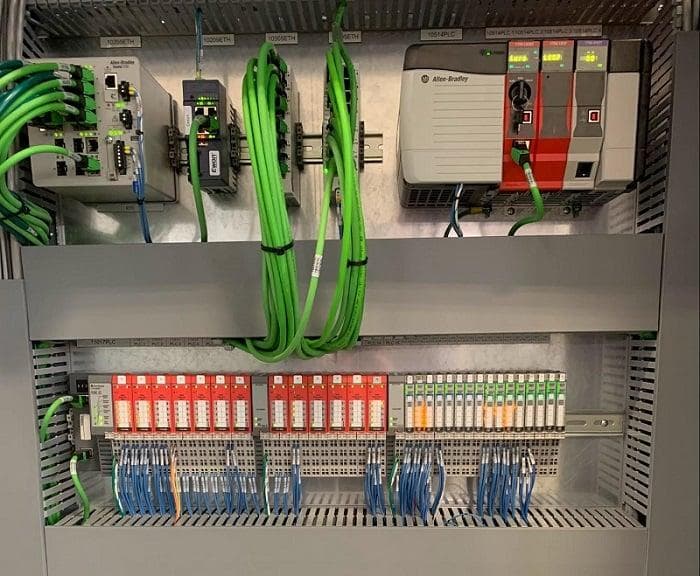
A Programmable Logic Controller (PLC) is an industrial computer designed to control machinery and automation processes.
PLCs receive inputs from sensors and execute programmed instructions to control outputs such as:
- motors
- valves
- relays
- actuators
Unlike traditional computers, PLCs are built to operate in harsh environments and deliver real-time performance with high reliability.
What Are Industrial Control Boards?
Industrial control boards are electronic circuits used to manage and regulate industrial equipment.
They include:
- relay boards
- logic boards
- interface boards
- controller modules
These boards act as intermediaries between sensors, PLCs, and machinery.
Types of Industrial Control Components
PLC Modules
PLC systems consist of modular components that perform different functions.
Example:
Allen-Bradley 1746-OA8 Digital Output Module
Siemens 6ES7322-1CF80-0AA0 Digital Output Module
These modules control output signals for industrial devices.
Relay and Interface Boards
Relay boards enable switching operations in automation systems.
Example:
Robertshaw MP12-1002 Relay Module
These boards are critical for signal control and power switching.
Control and Logic Boards
Control boards manage system logic and communication between components.
Example:
LiftMaster 29LG13433H Logic Board
Fujitsu N16B-0558-0270 Control Board
Industrial Interface Modules
Interface modules enable communication between devices and control systems.
Example:
National Instruments SB-GPIB-TNT PCB
VMIC VMIVME-2510B Digital I/O Module
Applications of PLC and Control Systems
Manufacturing Automation
PLCs control production processes such as:
- assembly lines
- CNC machines
- robotic arms
They ensure consistent product quality and efficiency.
Robotics Systems
Control boards and PLCs coordinate robotic movements and tasks.
These systems rely on real-time data processing for precision.
Energy and Utilities
PLCs monitor and control:
- power generation systems
- substations
- renewable energy installations
Process Industries
Industries such as oil and gas, chemical processing, and water treatment use PLC systems to manage complex processes.
Key Features of PLC Systems
Real-Time Processing
PLCs process input signals instantly and respond without delay.
Reliability
Designed for 24/7 operation in harsh environments.
Modular Design
Systems can be expanded with additional modules.
Easy Programming
PLCs use programming languages such as:
- ladder logic
- function block diagrams
- structured text
Integration Capability
PLCs integrate with:
- sensors
- motors
- industrial networks
Benefits of Industrial Control Boards
Improved Automation
Control boards enable machines to operate automatically with minimal human intervention.
Enhanced Safety
Systems can detect faults and trigger shutdowns to prevent accidents.
Scalability
Modular PLC systems can grow with industrial operations.
Reduced Downtime
Reliable control systems reduce system failures and maintenance costs.
Replacement and Legacy Control Systems
Many industrial facilities use older PLC systems that require replacement components.
Industrial Partner offers:
- discontinued PLC modules
- legacy control boards
- hard-to-find automation parts
Future Trends in Industrial Control Systems
Industry 4.0 Integration
Modern PLC systems are connected to:
- cloud platforms
- IoT devices
- data analytics systems
Smart Automation
Advanced control systems use:
- AI-driven decision-making
- predictive maintenance
Remote Monitoring
Operators can monitor systems remotely through connected control platforms.
Conclusion
Industrial control boards and PLC systems are the backbone of modern automation. They enable machines to operate efficiently, safely, and reliably across a wide range of industries.
From manufacturing and robotics to energy and process industries, PLC systems remain essential for controlling complex operations.
Companies sourcing control system components often rely on Industrial Partner, which provides a wide range of industrial automation parts and replacement solutions.
Browse PLC and control components