7 Signs Your Factory Needs an Industrial Automation Upgrade
Most factories do not fail suddenly. They fall behind gradually — through rising maintenance costs, slowing output, growing quality problems, and a widening gap between what competitors are doing and what the facility can deliver. By the time the problem feels urgent, the competitive damage is already done.
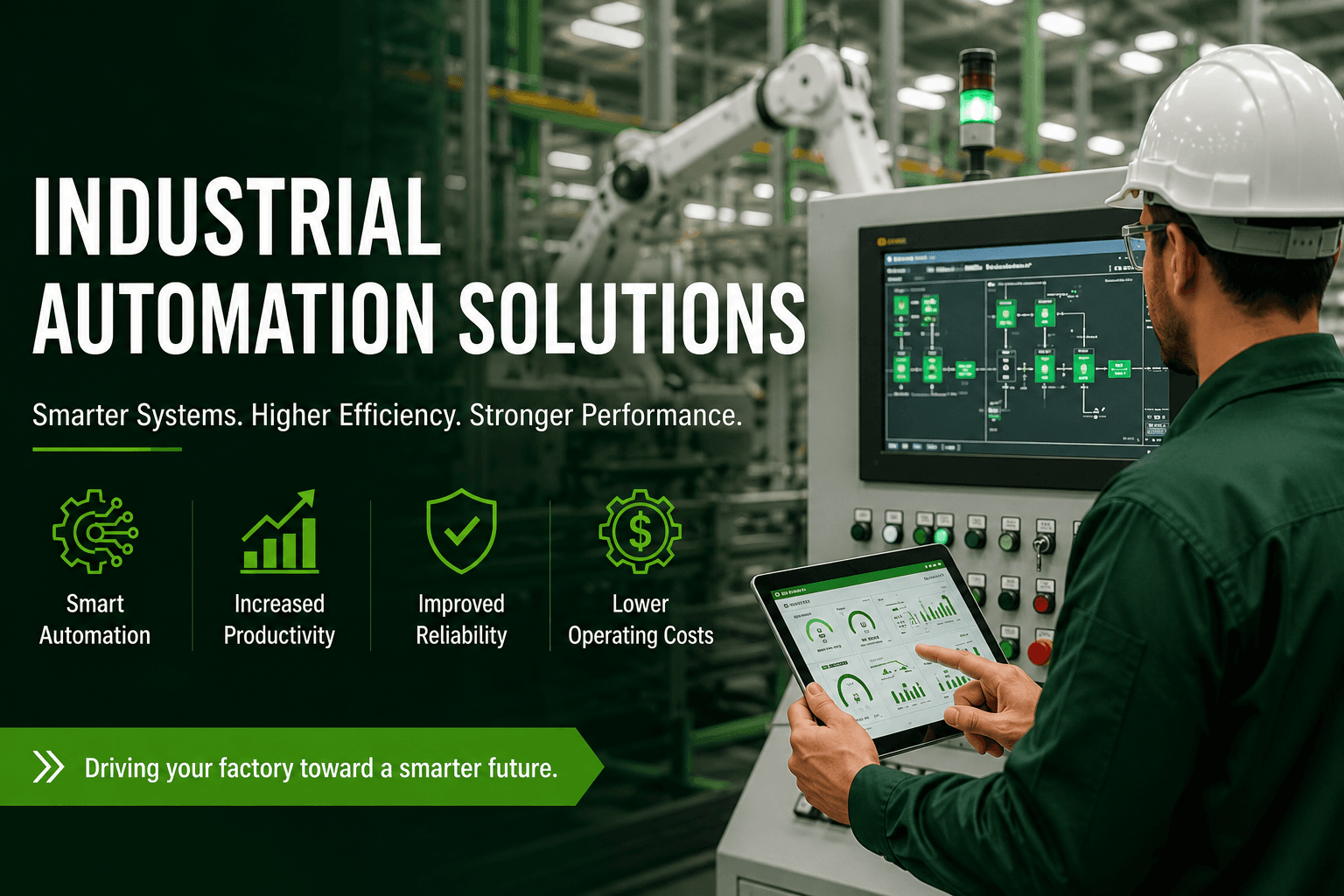
Industrial automation solutions exist precisely to close that gap. Modern factory automation systems replace manual, error-prone, and aging processes with intelligent, connected, and reliable ones — reducing downtime, improving throughput, and giving operations teams real-time visibility into everything happening on the floor.
But how do you know when it is genuinely time to invest? Here are seven signs that your facility is ready for an industrial automation upgrade — and what to do about it.
Industrial Partner offers a wide range of industrial automation components, controls, sensors, and drives to support factory upgrades of every scale. Get expert sourcing support for your automation project.
Browse industrial automation components or contact the team to discuss your project.
Sign 1: Unplanned Downtime Is Becoming a Regular Event
Occasional equipment failures happen in every facility. But when unplanned downtime becomes a recurring pattern — when the same machines break down repeatedly, when maintenance teams are always firefighting rather than preventing — it is a clear signal that the underlying systems are no longer fit for purpose.
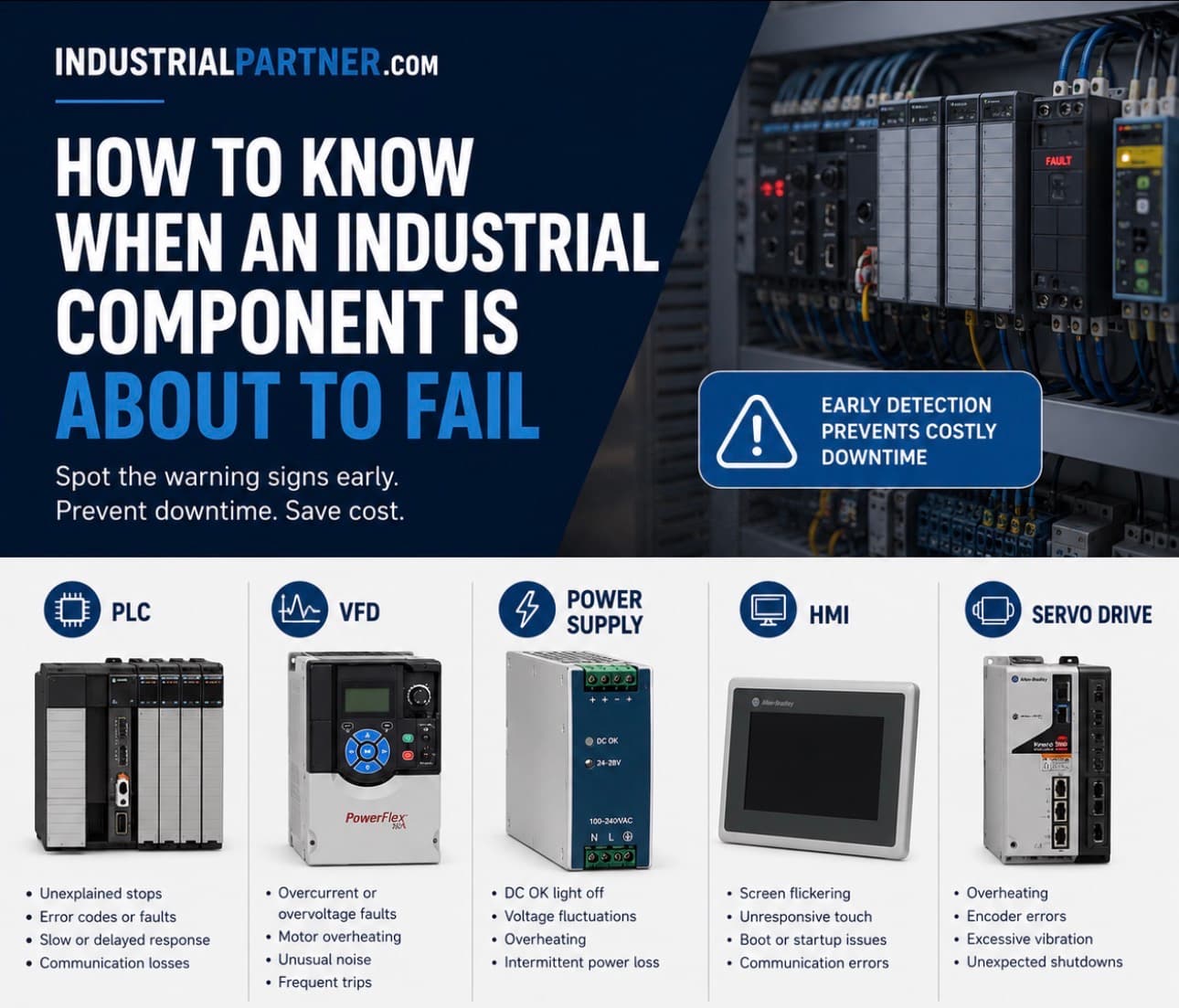
Older machinery without condition monitoring has no way to warn operators that a failure is approaching. Modern industrial process automation integrates sensors, PLCs, and monitoring systems that detect early warning signs — rising temperatures, unusual vibration, pressure anomalies — and trigger alerts or automatic responses before a breakdown occurs.
Facilities that have implemented sensor-based monitoring and automated shutdown protocols consistently report significant reductions in unplanned downtime compared to those relying on manual inspection schedules.
Related: Industrial Sensors and Monitoring Devices for Predictive Maintenance.
Sign 2: Product Quality Is Inconsistent or Defect Rates Are Rising
Manual production processes are inherently variable. Human operators — no matter how skilled — introduce inconsistencies in measurement, assembly, timing, and force application that automated systems simply do not. When defect rates start creeping upward, or when quality control catches increasing variation between batches, manual process limitations are often the root cause.
Manufacturing automation removes this variability. Automated assembly systems, robotic dispensing, vision inspection systems, and closed-loop process control maintain consistent parameters across every unit produced — at production speeds that human operators cannot match. The result is lower scrap rates, fewer reworks, and more consistent product quality reaching the customer.
Sign 3: Your Production Costs Are Rising While Output Stays Flat
If labor costs, energy consumption, and material waste are all trending upward while your output volume remains static or declines, your production process is becoming progressively less efficient. This is one of the clearest economic signals that factory automation systems are overdue.
Industrial automation solutions address cost inflation across multiple lines simultaneously:
• Automated processes reduce direct labor requirements for repetitive tasks
• Energy management systems optimize machine usage and reduce idle consumption
• Precision dispensing and cutting systems reduce raw material waste
• Faster cycle times increase output without proportional cost increases
The return on investment for automation projects in manufacturing environments has been well-documented. Facilities that have made targeted automation upgrades typically recover capital costs within 18 to 36 months through combined savings in labor, energy, and waste reduction.
Sign 4: Your Facility Relies on Obsolete Control Systems
Older PLCs, HMIs, and control panels that were installed 15 or 20 years ago may still be running — but they present a growing list of risks. Replacement parts for legacy control systems become increasingly difficult to source as manufacturers discontinue components. Programming expertise for older systems becomes scarcer. And critically, older control architecture often cannot integrate with modern industrial networks, IIoT platforms, or data analytics tools.
Running production-critical systems on obsolete control hardware is a procurement and operational risk. When a legacy PLC module or drive fails, sourcing a replacement under emergency conditions is expensive and time-consuming. Upgrading to current factory automation systems eliminates this risk while also unlocking the connectivity and data capabilities that modern operations require.
Related: Emergency Procurement: How to Source Critical Industrial Parts Fast.
Sign 5: You Have No Real-Time Visibility into Your Production Floor
If your operations team is making decisions based on end-of-shift reports, manual tallies, or gut instinct rather than live data, you are operating blind. Modern industrial process automation generates continuous data streams from every machine, line, and process — making it possible to monitor OEE (Overall Equipment Effectiveness), track yield in real time, identify bottlenecks as they form, and respond to deviations immediately.
The absence of real-time production visibility is not just an efficiency problem — it is a competitive one. Facilities with live floor data can respond to customer demand changes, equipment issues, and quality deviations faster than those waiting for manual reports. In markets where speed and flexibility are differentiators, this gap matters.
Industrial automation solutions that include SCADA systems, industrial IoT connectivity, and cloud-based monitoring dashboards give operations teams the visibility they need to manage proactively rather than reactively.
Sign 6: Labor Shortages Are Affecting Production Capacity
The skilled labor shortage affecting manufacturing globally is not a short-term problem. Experienced machine operators, maintenance technicians, and assembly workers are increasingly difficult to hire and retain — and the demographic trends driving this shortage are structural, not cyclical.
Manufacturing automation directly addresses this challenge by reducing dependence on manual labor for repetitive, physically demanding, or precision-critical tasks. Automated assembly lines, robotic material handling, and automated inspection systems allow facilities to maintain or increase output with a smaller, differently skilled workforce focused on oversight, maintenance, and process improvement.
Importantly, automation does not eliminate the need for skilled workers — it shifts the skills required. Facilities that invest in factory automation systems also typically invest in retraining programs that move workers from repetitive tasks to higher-value roles in programming, monitoring, and maintenance.
Sign 7: Competitors Are Outpacing You on Speed, Price, or Both
Sometimes the clearest signal that an automation upgrade is needed is not internal at all — it is market feedback. If competitors are consistently undercutting your prices, delivering faster, or offering shorter lead times without sacrificing quality, the most likely explanation is that their production processes are more efficient than yours.
Industrial automation solutions that reduce cycle times, minimize changeover durations, and enable flexible production configurations directly improve a facility's competitive position. The factories winning on cost and speed in today's manufacturing environment are almost universally those that have made systematic investments in industrial process automation over the past decade.
The question is no longer whether to automate — it is how quickly and how strategically to do it.
Automation Assessment: Industrial Partner can help you identify the right components and systems for your facility's automation upgrade — from sensors and drives to PLCs and control panels. Get expert guidance tailored to your production environment.
Browse industrial automation components or contact Industrial Partner to get a customized automation assessment.
How to Plan an Industrial Automation Upgrade
Recognizing that an upgrade is needed is the first step. Translating that recognition into a structured investment plan requires a systematic approach.
Start With a Process Audit
Before selecting any technology, document your current production processes in detail. Identify the steps with the highest manual labor content, the highest error rates, the longest cycle times, and the most frequent failure points. These are your highest-priority automation candidates.
Define Your Objectives
Be specific about what you want to achieve. Reducing unplanned downtime by a target percentage, cutting defect rates, achieving a specific throughput increase, or eliminating a particular manual process — clear objectives make it possible to evaluate ROI and select the right industrial automation solutions.
Assess Integration Requirements
Modern factory automation systems must integrate with your existing equipment, control architecture, and data infrastructure. Evaluate whether new automation components can connect to your current PLCs and networks, or whether a broader control system upgrade is also required.
Build a Phased Implementation Plan
Attempting to automate an entire facility in a single project is rarely practical. A phased approach — starting with the highest-impact processes and expanding from there — manages cost, operational disruption, and organizational change more effectively. Each phase should deliver measurable results that build the business case for the next.
Work With a Knowledgeable Industrial Component Supplier
The success of any automation project depends on having access to the right components — the correct PLC modules, sensors, drives, relays, and control hardware — from a supplier with the technical expertise to support your specification and sourcing decisions.
Industrial Partner stocks a broad range of industrial automation components across all major manufacturers, with technical support to help you select and source the right equipment for your upgraded project.
Conclusion: The Right Time to Upgrade Is Before the Crisis
The seven signs covered in this article — recurring downtime, rising defect rates, stagnant output with increasing costs, obsolete control systems, lack of real-time visibility, labor shortages, and competitive pressure — rarely appear in isolation. In most facilities, several of these signals are present simultaneously, each compounding the impact of the others.
The factories that address these signals proactively, investing in industrial automation solutions before a crisis forces their hand, consistently outperform those that wait. They recover upgrade costs faster, face fewer emergency procurement situations, retain better workforce engagement, and compete more effectively on price and delivery speed.
If your facility is showing even two or three of these signs, the conversation about industrial process automation should be happening now — not after the next major breakdown.
Get started: Industrial Partner specializes in sourcing industrial automation components, controls, sensors, and drives for factory upgrade projects of every scale. Get a customized automation assessment and discover opportunities to improve efficiency and reduce downtime.
Browse industrial automation solutions or contact Industrial Partner today for a customized automation assessment.